

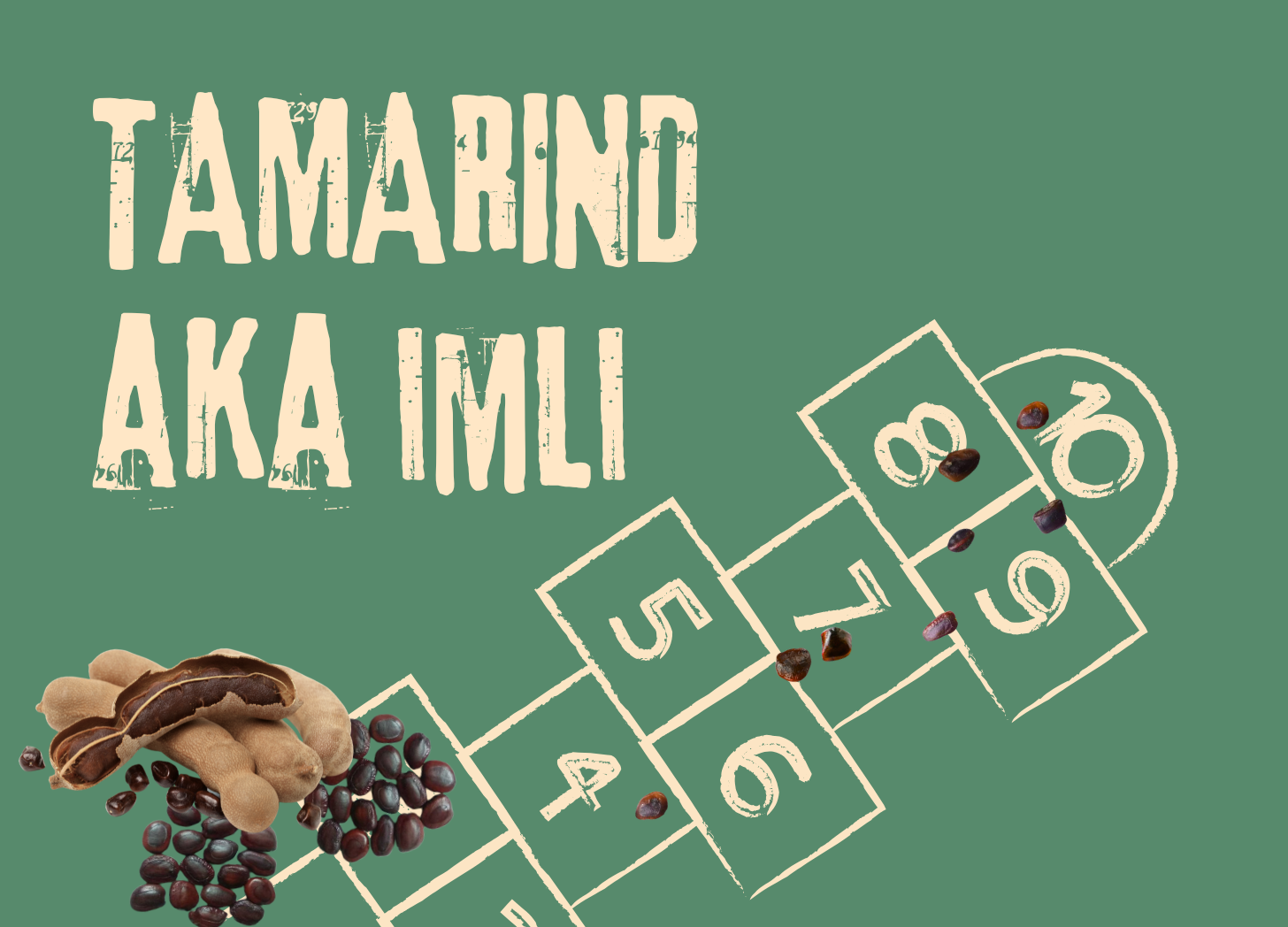
Tamarind, tucked inside its humble brittle brown pod, holds more than just tangy pulp; for many including yours truly, it contains fond echoes of childhood. There is a nostalgic magic in cracking open a plucked or picked dried pod to find those glossy, dark seeds nestled within.
Children across generations have treated these seeds as treasures, saving them in jars to play games or simply to admire their smooth, obsidian-like sheen. I, for one, would partake in exhausting hot afternoon games of hopscotch with Tamarind seeds used as markers, tossed with precision into chalk-drawn squares.
 It was indeed a tactile introduction to a fruit (yes, it is a fruit, though we treat it more like a spice!) that has shaped the culinary and cultural identity of the tropics for centuries.
The “Indian Date’s” globetrotting adventures
The name “tamarind” itself is a linguistic bridge to its past, deriving from the Arabic Tamar Hind, meaning “Indian date.” While the tree is indigenous to the dry savannas of tropical Africa, it migrated early to Asia, where it was cultivated so extensively that it is often considered a species native to the Indian subcontinent. In India, the tree reached a status beyond that of a mere crop; it was deemed sacred, with legends suggesting that it is what gave elephants their wisdom. This spiritual connection is mirrored in Buddhist parables, where its seeds are symbols of patience.
As a bona fide globetrotter, this fruit’s journey spans continents. Since the 13th century, it has been used for various medicinal purposes, including the treatment of jaundice and fevers, and to cool the body. Its high vitamin C content made it essential for long-distance maritime trade; 400 years ago, Makassar traders planted these trees in northern Australia to alleviate the scurvy they experienced after sailing 1,500 kilometers from modern Indonesia.
Later, in the 16th century, Spanish and Portuguese colonists introduced the plant to Mexico and Central America, where it became a regional staple habiting everything from agua fresca to street-side candies.
The alchemist of the kitchen
Coming back to India, Tamarind is the non-negotiable heart of South Indian cuisine. It’s pulp provides the essential mouth-puckering tang for rasam and sambhar, a sharp acidity that remains stable throughout the cooking process, unlike citrus aromas that can break down under heat. Beyond the plate, this versatile fruit serves as a natural alchemist in the household.
The pulp, rich in tartaric acid, is a potent natural cleaning agent. For generations, families, including my own, have used its tangy water to remove Verdigris (the green pigment of oxidation) from copperware. This practice continues today in many traditional households, where a small ball of the pulp is the preferred, eco-friendly alternative to chemical metal polishes.
From the playgrounds of India to the kitchens of Mexico and the ancient trade routes of the Indian Ocean, the humble tamarind is a reminder of real food, simpler times, and forgotten wisdom.
Try Safe Harvest's Tamarind, the best you'll ever savour! Red, seedless, without fibre and fresh, our Tamarind is sulphite free and is picked, de-shelled, and defibered by women farmers!
#pesticidefree #tamarind #seedlesstamarind #imli #nofiber


